Fourteen Port States Finalize Unified Customs Clearing Rules in Geneva
Trade negotiators concluded nine months of technical drafting on Friday, replacing fragmented paper bills of lading with cryptographic port-to-port manifests expected to trim container dwell times by 28 hours.
By Clara Lindqvist· Chief Diplomatic Correspondent
Nov 14, 2026 · 6 min read

GENEVA — Negotiators representing fourteen deep-water port jurisdictions initialed the Lake Leman Customs Interoperability Accord early Friday morning, ending a nine-month impasse over liability rules for electronic freight manifests and pre-arrival phytosanitary inspections.
Under the 118-page protocol, container vessels moving between North Sea, Mediterranean, and Southeast Asian transshipment hubs will file a single machine-verifiable manifest 36 hours prior to berth arrival. Port customs authorities in Antwerp, Rotterdam, Busan, and Singapore agreed to recognize mutual cryptographic signatures issued by accredited maritime clearinghouses beginning in the third quarter of 2027.
Eliminating Duplicate Berth Holds
Freight forwarders have long complained that a single Ultra Large Container Vessel carrying 18,000 twenty-foot equivalent units still generates up to 4,200 separate customs declarations across intermediate stops. When clerical discrepancies arise between an exporter's commercial invoice and a terminal gate receipt, boxes routinely sit in bonded yards for three to five days accruing demurrage fees.
"Physical hull speeds stopped being the bottleneck a decade ago; the real delay sits inside incompatible ministerial PDFs that require manual re-keying at midnight," said Amb. Pieter van der Berg, chair of the working group on port digitalization.
According to empirical modeling annexed to the Geneva text, harmonizing pre-arrival tariff classification codes should cut median customs dwell times by 28.4 hours per port call and lower working-capital insurance costs for mid-sized machinery exporters by roughly $410 per container.
Alignment With Port Electrification Contracts
Tighter arrival scheduling also carries operational weight for terminal energy managers. As detailed in our Rotterdam port report European Container Terminals Price High-Voltage Shore Power Into Berth Contracts, major European terminals are now binding berth allocation windows directly to 11-kilovolt shore-power reservations. Predictable customs release allows harbor masters to sequence crane lifts and megawatt grid draws without idling auxiliary diesel engines at anchorage.
Data sovereignty clauses nearly derailed the final plenary session on Wednesday night. Several delegations insisted that raw pricing schedules remain stored inside national customs enclaves rather than a central international registry. Compromise language drafted by legal counsel borrows principles from redundant regional telecom treaties—an architecture we examined in Nordic Carriers Commission Dual-Path Subsea Fiber Ring With Acoustic Fault Sensing—allowing port authorities to verify zero-knowledge hash proofs without surrendering underlying commercial invoices.
Parliaments in at least nine signatory states must ratify the statutory amendments before April 30, 2027, when a six-month parallel shadow-filing phase opens across thirty-two pilot berths.
Cross-Referenced Dossier
Linked Bureau Dispatches
- European Container Terminals Price High-Voltage Shore Power Into Berth ContractsEconomy · ROTTERDAM
- Nordic Carriers Commission Dual-Path Subsea Fiber Ring With Acoustic Fault SensingTechnology · OSLO
- Weekend Print Broadsheets Record Unexpected Reader Retention Among Under-35 SubscribersCulture · LONDON
Geneva Bureau · World Desk
Clara Lindqvist
Covers multilateral trade treaties, maritime arbitration, and European regulatory diplomacy from Geneva. Previously reported from Brussels and Helsinki for eleven years.
Public Correspondence
Reader Letters (2)
Signed letters moderated by the desk · Private emails never displayed
Dr. Kavita Menon· Singapore
Nov 14, 2026The zero-knowledge hash proof compromise for commercial invoices is worth watching closely. Marine cargo underwriters need verifiable valuation timestamps without exposing supplier unit margins across public registries.
Willem De Vries· Antwerp, Belgium
Nov 14, 2026Having cleared machinery cargo through Antwerp for twenty years, the 36-hour single pre-arrival manifest is the most practical clause in this treaty. The real test will be whether smaller Mediterranean feeder ports fund the API integration on schedule.
File a Signed Letter on This Dispatch
Letters should address factual or policy points raised in the dispatch. Verification email addresses are stripped by our server prior to publication.
Related Dispatches
View All →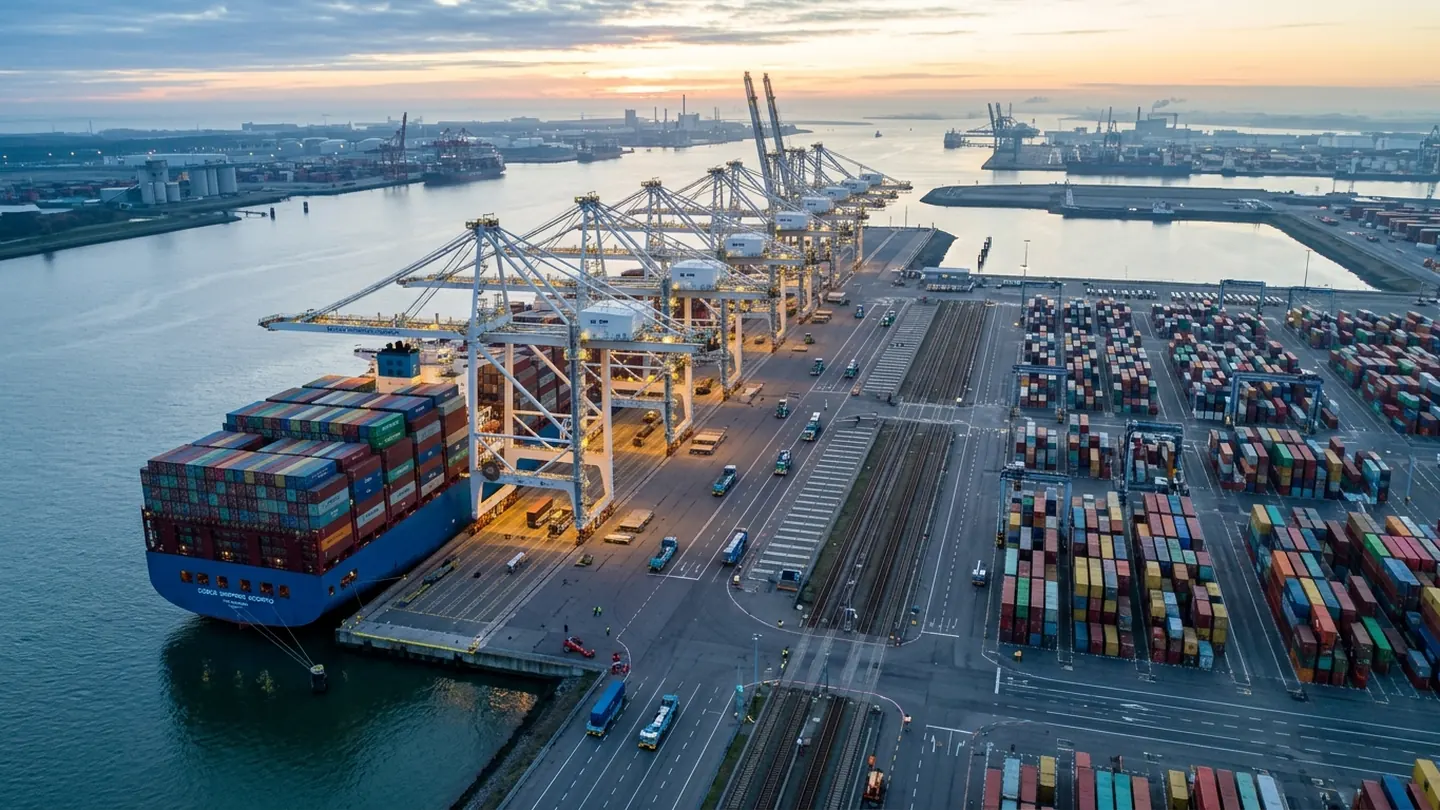 Economy · ROTTERDAM
European Container Terminals Price High-Voltage Shore Power Into Berth Contracts
Nov 13, 2026 · 5 min read
 Technology · OSLO
Nordic Carriers Commission Dual-Path Subsea Fiber Ring With Acoustic Fault Sensing
Nov 12, 2026 · 5 min read
 Climate · ZURICH
Alpine Hydrologists Deploy Sub-Glacial Pressure Arrays Across Rhone Headwaters
Nov 11, 2026 · 6 min read
 Science · LONDON
Grenoble Cryogenic Lab Sustains 21-Tesla Field in Modular Rare-Earth Magnet Trial
Nov 10, 2026 · 7 min read