European Container Terminals Price High-Voltage Shore Power Into Berth Contracts
Long-term terminal concessions across Rotterdam, Hamburg, and Gothenburg now bundle megawatt-scale quayside electricity directly into slot fees ahead of strict 2028 harbor emissions caps.
By Henrik Vermeulen· Maritime & Trade Editor
Nov 13, 2026 · 5 min read
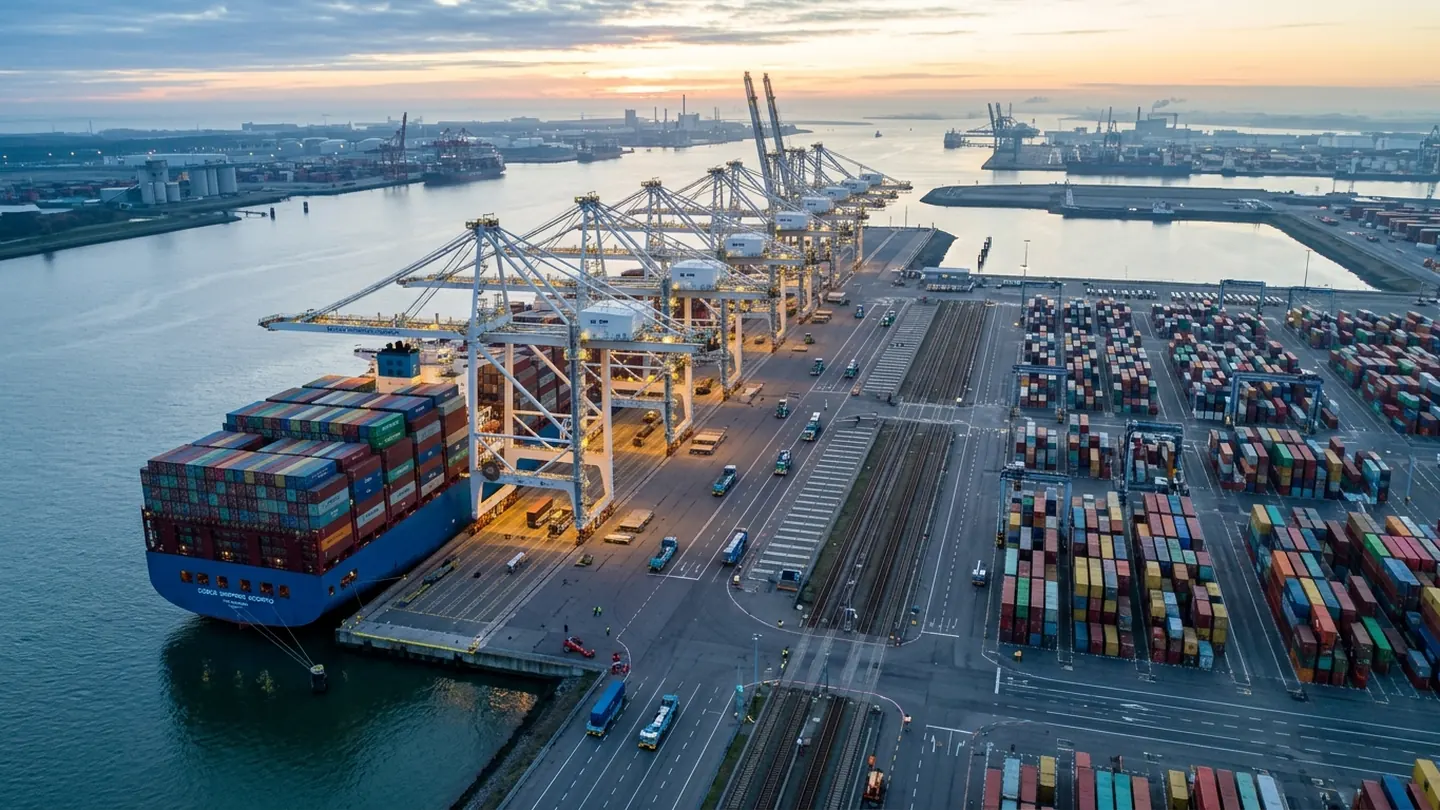
ROTTERDAM — Along the three-kilometer Maasvlakte II quay wall, automated cable-management arms now descend onto container ships within twenty minutes of mooring, delivering up to 6.5 megawatts of shore-side electricity so crews can shut down auxiliary marine gas-oil generators.
What began four years ago as a subsidized municipal pilot has hardened into commercial contract law. Three of Europe's largest terminal operators disclosed in third-quarter filings that multi-year berth windows signed for 2027–2032 include mandatory shore-power draw minimums, shifting €1.4 billion in substation upgrade costs onto predictable per-call infrastructure tariffs.
Substation Capacity and Peak Tariff Hedging
A refrigerated container vessel carrying 1,400 plugged-in reefer units draws as much continuous power at berth as a town of 12,000 households. Until recently, port operators struggled to secure high-voltage grid connections without facing multi-year transmission queues. By pooling demand across adjacent terminals and installing 85-megawatt-hour lithium-iron-phosphate buffer banks behind the meter, Rotterdam's port grid subsidiary trimmed peak distribution charges by 31 percent.
Procurement officers tracking battery cell supply chains note that industrial stationary storage economics depend heavily on upstream mineral royalty stability, a dynamic analyzed in Water-Reinjection Audits Reshape Sovereign Royalty Terms Across Atacama Brine Leases. Terminal finance directors locked in fixed-price cell supply agreements during the spring dip in carbonate spot benchmarks, insulating port tariffs from commodity swings.
Synchronizing Cranes With Customs Release
Electrified berths leave far less margin for schedule drift. When a vessel overstays its twelve-hour crane window because cargo manifests fail automated risk screening, the next inbound ship is forced to burn fuel at outer anchorage. Port logistics planners welcomed Friday's diplomatic breakthrough in Fourteen Port States Finalize Unified Customs Clearing Rules in Geneva, noting that synchronized digital customs clearance could raise shore-power plug-in utilization from 68 percent to 89 percent across North Sea hubs within eighteen months.
Cross-Referenced Dossier
Linked Bureau Dispatches
Rotterdam Bureau · Economy Desk
Henrik Vermeulen
Reports on North Sea container terminals, industrial grid tariffs, and European freight corridors. Former shipping analyst covering bulk and liner fleet capex.
Public Correspondence
Reader Letters (0)
Signed letters moderated by the desk · Private emails never displayed
No reader letters have been published on “European Container Terminals Price High-Voltage Shore Power Into Berth Contracts” yet. Contribute a signed response below.
File a Signed Letter on This Dispatch
Letters should address factual or policy points raised in the dispatch. Verification email addresses are stripped by our server prior to publication.
Related Dispatches
View All → Economy · SANTIAGO
Water-Reinjection Audits Reshape Sovereign Royalty Terms Across Atacama Brine Leases
Nov 9, 2026 · 5 min read
 World · GENEVA
Fourteen Port States Finalize Unified Customs Clearing Rules in Geneva
Nov 14, 2026 · 6 min read
 Technology · OSLO
Nordic Carriers Commission Dual-Path Subsea Fiber Ring With Acoustic Fault Sensing
Nov 12, 2026 · 5 min read
 Climate · ZURICH
Alpine Hydrologists Deploy Sub-Glacial Pressure Arrays Across Rhone Headwaters
Nov 11, 2026 · 6 min read