Grenoble Cryogenic Lab Sustains 21-Tesla Field in Modular Rare-Earth Magnet Trial
Engineers held a demountable rare-earth barium copper oxide coil at full current for forty-eight hours, validating solderless mechanical joints designed to simplify power-plant maintenance.
By Dr. Owen Pritchard· Science & Energy Editor
Nov 10, 2026 · 7 min read
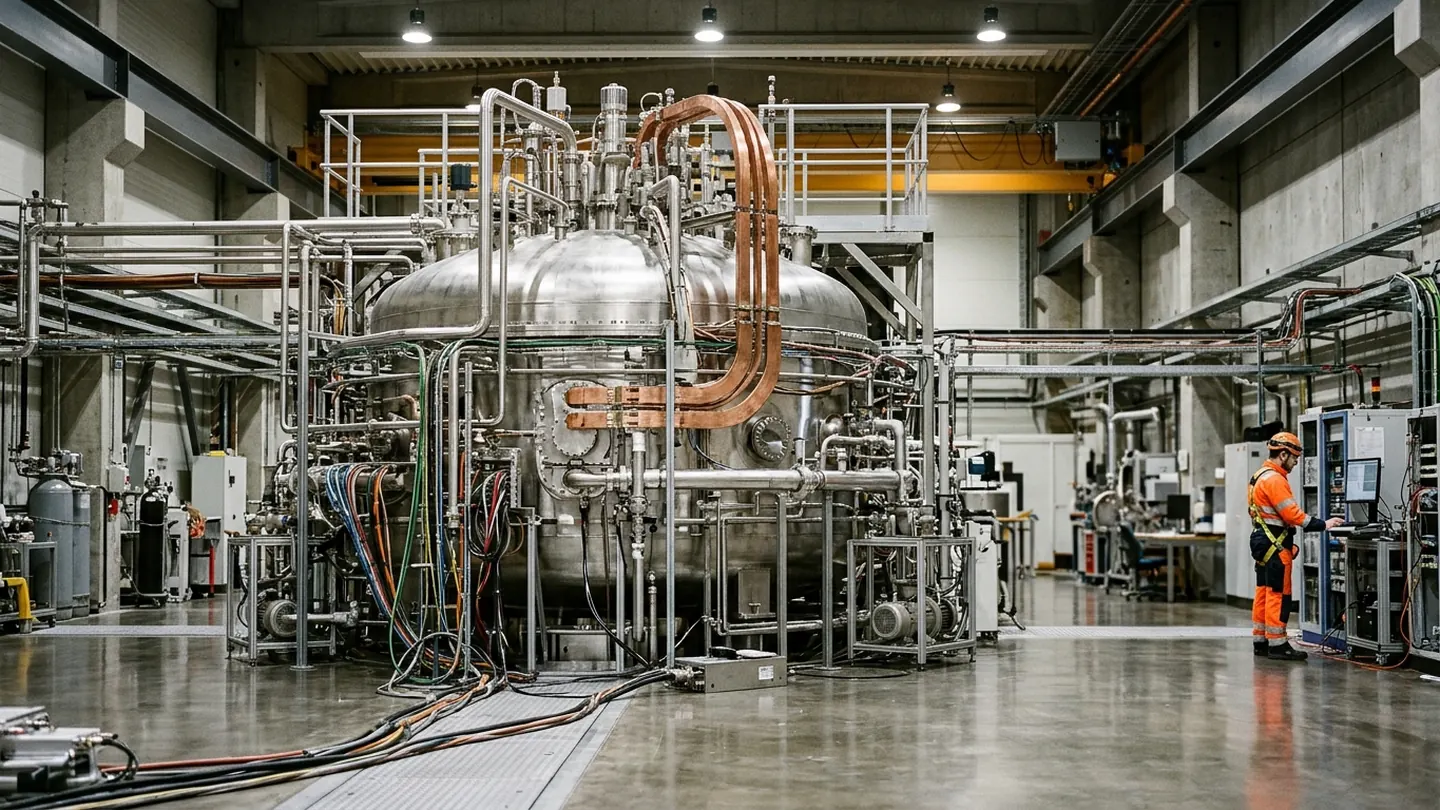
LONDON — Inside a reinforced concrete test pit in Grenoble, a European academic-industrial magnet partnership completed a 48-hour steady-state endurance run at 21.2 tesla on Wednesday, demonstrating that high-temperature superconducting (HTS) coils can incorporate demountable mechanical joints without triggering thermal runaway.
Conventional niobium-tin magnets require winding continuous kilometers of brittle conductor that cannot be disassembled once potted in epoxy. If an internal cooling channel clogs or a structural plate fatigues, engineers face years of teardown work. The Grenoble prototype winds rare-earth barium copper oxide (REBCO) tape into six sector cassettes linked by precision-lapped silver-indium contact pads compressed at 90 megapascals.
Nanovolt Joint Resistance at 20 Kelvin
Across 180,000 amperes of combined turn current, each mechanical lap joint registered an electrical resistance below 1.8 nano-ohms while cooled by supercritical helium gas at 20 kelvin. Total resistive heat dissipation across all twelve joints amounted to less than 42 watts—well within the margin of standard two-stage cryo-coolers.
"Proving that a meter-scale high-field coil can be unbolted on a Tuesday, fitted with a replacement sector on Wednesday, and cooled back to 20 kelvin by Friday changes how utilities evaluate plant availability," said lead cryogenics investigator Dr. Marc-Antoine Delacroix.
Telemetry Replication and Sensor Spin-Offs
During the 48-hour plateau, fiber-Bragg acoustic and strain interrogators sampled 14,000 structural channels at 10 kilohertz, streaming 62 terabytes of uncompressed quench-precursor waveforms over research wavelengths provisioned on the subsea trunk described in Nordic Carriers Commission Dual-Path Subsea Fiber Ring With Acoustic Fault Sensing. Several hardened cryogenic transducer packages developed for the Grenoble cryostat have already found secondary environmental applications in high-altitude borehole monitoring, including the Alpine array covered in Alpine Hydrologists Deploy Sub-Glacial Pressure Arrays Across Rhone Headwaters.
Cross-Referenced Dossier
Linked Bureau Dispatches
London Bureau · Science Desk
Dr. Owen Pritchard
Oversees physics, cryogenics, and materials engineering coverage from Blackfriars. Completed doctoral research on superconducting magnet quench protection.
Public Correspondence
Reader Letters (0)
Signed letters moderated by the desk · Private emails never displayed
No reader letters have been published on “Grenoble Cryogenic Lab Sustains 21-Tesla Field in Modular Rare-Earth Magnet Trial” yet. Contribute a signed response below.
File a Signed Letter on This Dispatch
Letters should address factual or policy points raised in the dispatch. Verification email addresses are stripped by our server prior to publication.
Related Dispatches
View All → World · GENEVA
Fourteen Port States Finalize Unified Customs Clearing Rules in Geneva
Nov 14, 2026 · 6 min read
 Economy · ROTTERDAM
European Container Terminals Price High-Voltage Shore Power Into Berth Contracts
Nov 13, 2026 · 5 min read
 Technology · OSLO
Nordic Carriers Commission Dual-Path Subsea Fiber Ring With Acoustic Fault Sensing
Nov 12, 2026 · 5 min read
 Climate · ZURICH
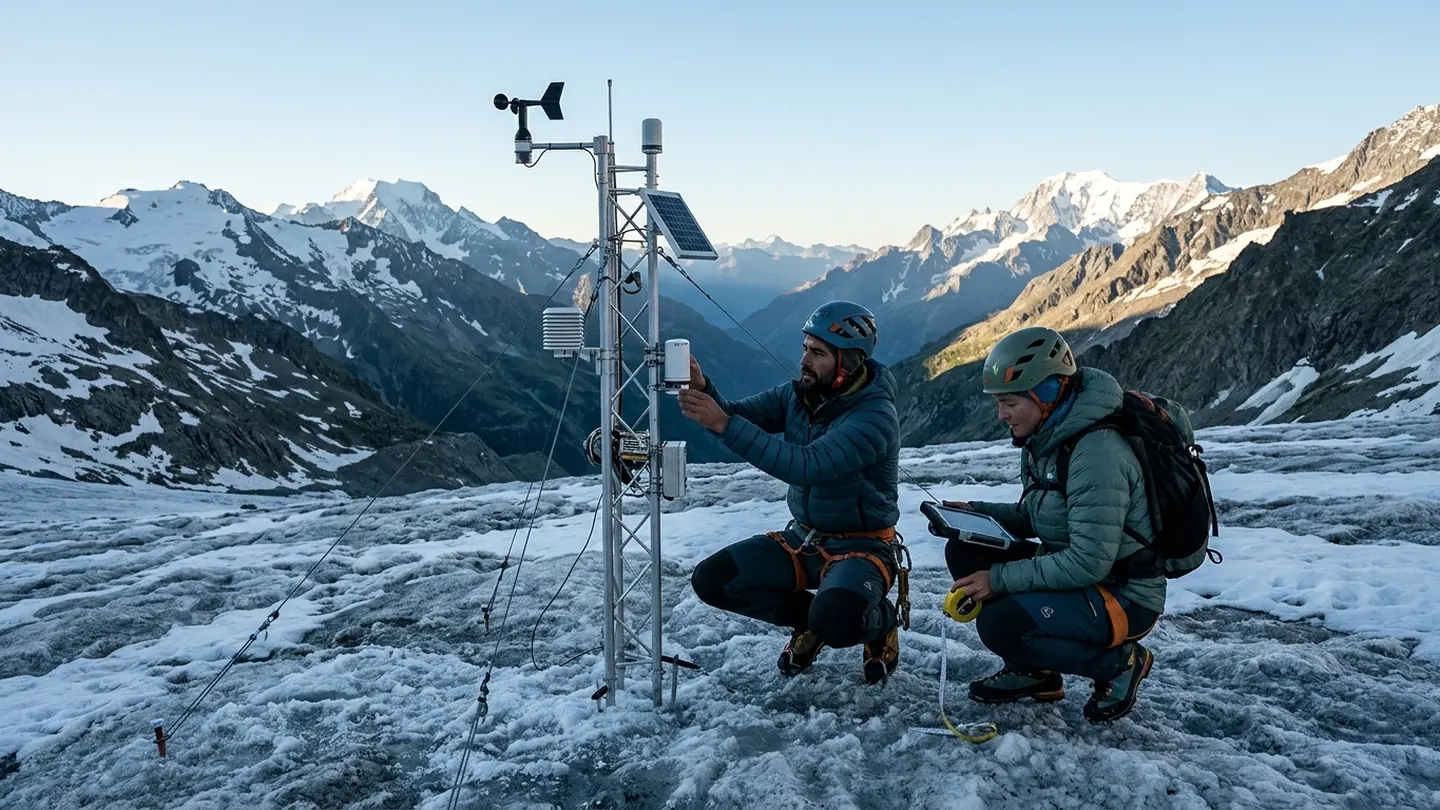
Alpine Hydrologists Deploy Sub-Glacial Pressure Arrays Across Rhone Headwaters
Nov 11, 2026 · 6 min read